Executive Summary
Earth’s climate is changing rapidly, largely caused by anthropogenic emissions of greenhouse gases. The response of the international community so far is encapsulated by the Paris Agreement of 2015; however, even if all countries fully implement their pledges, known as Nationally Determined Contributions (NDCs), we can expect a global average temperature rise of 3.2° Celsius this century. With such a temperature rise comes significant risks. The temperature change, and the associated impacts, will vary greatly across, and within, regions and countries, and will range from the inundation of coastal land due to sea-level rise in the Pacific islands and forest fires in Siberia, to flooding caused by extreme precipitation in Europe and glacier melt on the Tibetan Plateau.
These impacts have the potential to affect the Outstanding Universal Value (OUV) of the world’s 869 cultural World Heritage Sites. Each cultural world heritage site will face a unique set of risks based on location and form. There are established methodologies for assessing climate change risk which can be adapted and applied to cultural World Heritage Sites. There will be losses, and some World Heritage Sites may require radical action (e.g. relocation) to save them. Although the net effects of climate change will be overwhelmingly negative, there may be opportunities associated with climate change, for example, the exposure of new culturally important sites due to the melting of permafrost. And, although focusing on the risks of climate change to cultural World Heritage Sites, this document also touches on the role of these sites in tackling the causes of anthropogenic climate change and in communicating the issue of climate change to the public.
Introduction
In 1972, UNESCO Member States adopted the Convention concerning the Protection of the World Cultural and Natural Heritage in order to create an appropriate framework for the preservation of our shared heritage for the benefit of current and future generations. Since then, climate change has emerged as a threat to the integrity of many World Heritage sites, including their Outstanding Universal Value.
In the past few years, there have been studies to examine the likely impacts of climate change on cultural heritage, and to develop policies for managing cultural heritage in the face of climate change. In 2006, under the guidance of the World Heritage Committee, UNESCO prepared a report on Predicting and Managing the Effects of Climate Change on World Heritage (2007), followed by a compilation of Case Studies on Climate Change and World Heritage, and a Policy Document on the Impacts of Climate Change on World Heritage Properties in 2008. In May 2014, it published a practical guide to Climate Change Adaptation for Natural World Heritage Sites. In late 2019 and early 2020 a consultation was held to gather input with a view to updating the “Policy Document on the Impacts of Climate Change on World Heritage properties” and an update is expected soon.[1]
This paper builds on that work by examining the climate change-related risks facing cultural World Heritage Sites and makes recommendations for how to assess and mitigate those risks. It has been written for the Antiquities Coalition as a discussion document.
Context: Climate Change and the Global Response
Record-setting temperatures, accelerating ice melt, inundation of populated areas from sea level rise, out-of-control fires, extensive coral reef bleaching, and high intensity storms are increasingly frequent around the world, with growing impacts on the species inhabiting this planet, including the human population and infrastructure. Although the climate system is complex, and there remains uncertainty about the scale of the impacts, there is a growing body of science, summarized by the Intergovernmental Panel on Climate Change (IPCC) in its five yearly Assessment Reports, that predicts significant warming in the 21st century and associated risks.
The international response to the climate crisis has evolved since the Earth Summit in Rio de Janeiro in 1992 with the first international agreement to tackle climate change—the Kyoto Protocol—agreed in 1997 and, more recently, the more comprehensive Paris Agreement in 2015. Under the Paris Agreement, all participating countries are required to act to reduce or eliminate greenhouse gas emissions. Commitments are encapsulated in countries’ Nationally Determined Contributions (NDCs). At the time of writing, even if all countries were to implement their respective NDCs, we can expect a 3.2°C temperature rise this century.
The Impacts of Climate Change
A temperature rise of 3.2°C may not sound like much. However, the Earth’s biosphere is in a delicate balance, and an increase in average temperature of 3.2°C is predicted to result in significant instability and associated risks. Importantly, the temperature rise will not be even across the globe. Polar regions will warm more, and faster, than equatorial regions, and some regions may even become cooler, for example northwest Europe could experience cooler temperatures due to a slowing of the Gulf Stream caused by changing weather patterns and ice melt.
The most recent IPCC Assessment Report 5 (IPCC AR5) says:
Climate change will amplify existing risks and create new risks for natural and human systems. Risks are unevenly distributed and are generally greater for disadvantaged people and communities in countries at all levels of development.[2]
So, what are those risks and how are they distributed?
Risks
The table on the following page summarizes the key risks by region.
Direct Risks for World Heritage Sites
The risks outlined in the table above have clear implications for cultural World Heritage Sites including to their OUV and, potentially, economic losses given that many of these sites are popular tourist destinations. To illustrate what these risks could mean, it’s informative to look at three of the most prominent risks and their potential impacts on cultural World Heritage Sites:
i) Sea-level rise: sea-level rise and associated flooding and coastal erosion are particular risks as ancient civilizations were often built on water, and most Cultural World Heritage Sites are of ancient origin. For example, a 2018 study published in Nature Communications[4] revealed that, of 49 cultural World Heritage Sites located in coastal areas of the Mediterranean, 37 (75%) are at risk from a 100-year flood and 42 (86%) from coastal erosion and that, by 2100, flood risk may increase by 50% and erosion risk by 13% across the region, with considerably higher increases at individual World Heritage Sites.
ii) Floods and droughts: climate change is predicted to lead to more extreme weather events where precipitation is more intense and droughts more pronounced. Higher intensity of precipitation could lead to the overwhelming of drainage systems, leading to surface flooding and potential flood damage. More pronounced droughts could lead to humidity-related stress on infrastructure.
iii) Extreme heat events and wildfires: in the case of extreme heat, drought, and changes in wind patterns, the vulnerability of cultural World Heritage Sites to wildfires and heat stress could increase. For example, in early 2020 many Aboriginal cultural heritage sites were lost to, or damaged by, bushfires in Australia.[5]
Indirect Risks for World Heritage Sites
In addition to the direct risks, there are indirect risks that could affect cultural World Heritage Sites. For example, the impacts of climate change on local people could, in turn, impact cultural World Heritage Sites. Crop failure, disease, and storms of greater ferocity, weakening the ability of countries to provide for their citizens, could all lead to social unrest. Increasingly scarce water resources could exacerbate tensions between countries. All these could lead to a breakdown in local livelihoods in some areas, particularly in developing countries, and an increased risk of looting. In addition, the impact of climate change on local infrastructure, such as electricity and roads, may impact on the operation and maintenance of World Heritage Sites.
Opportunities
Although the impacts of climate change will be overwhelmingly negative, there may be opportunities for cultural heritage. For example, the melting permafrost may reveal previously unknown cultural heritage in polar regions (see case study example 1 below). Changes in climate may also present opportunities for the utilization of renewable energy such as solar and wind power. Planning for climate change should seek to identify opportunities in addition to risks.
Examples Of Adaptation Response
Given adaptation measures need to be integrated without compromising Outstanding Universal Value, adaptation planning for World Heritage Sites is challenging.
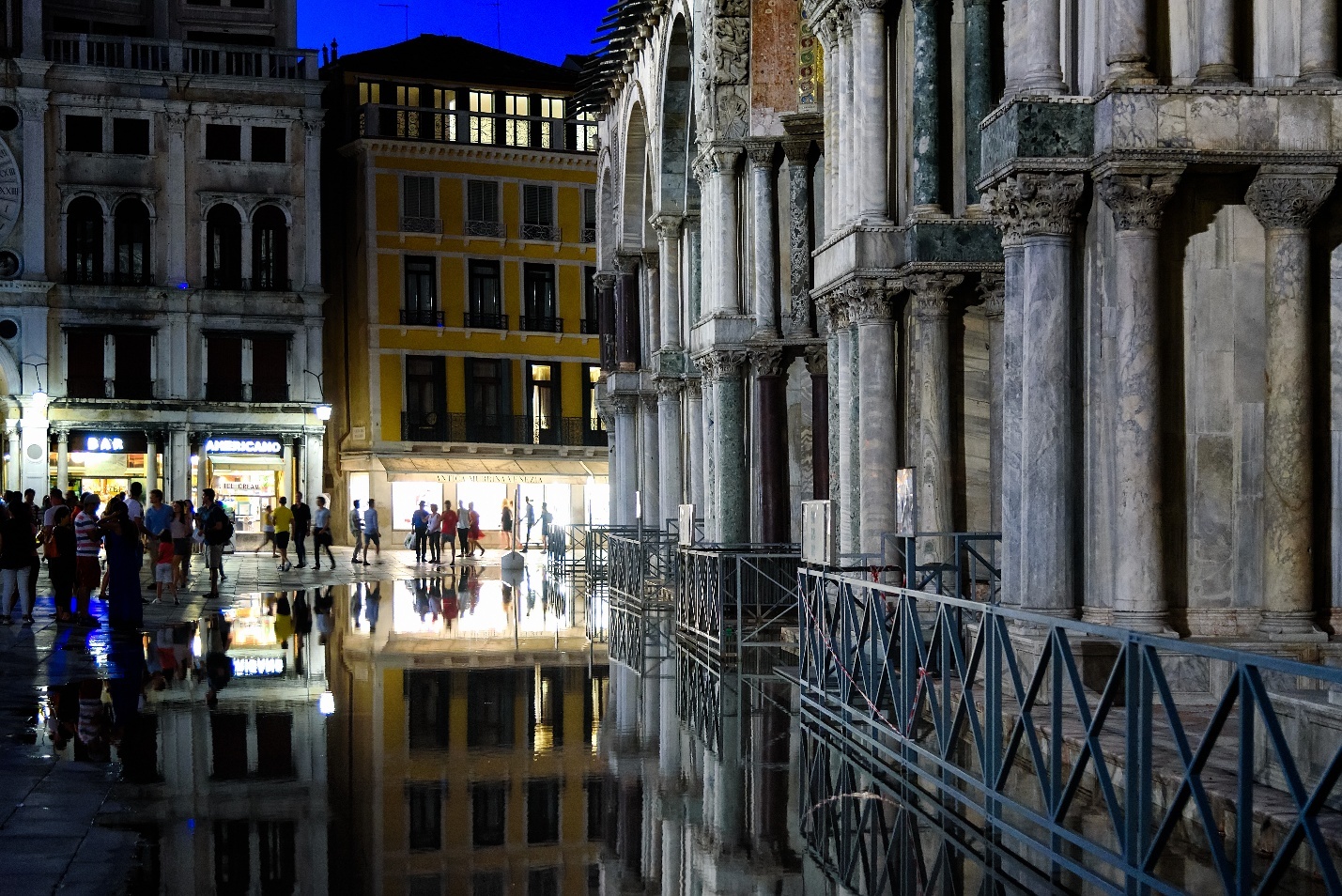
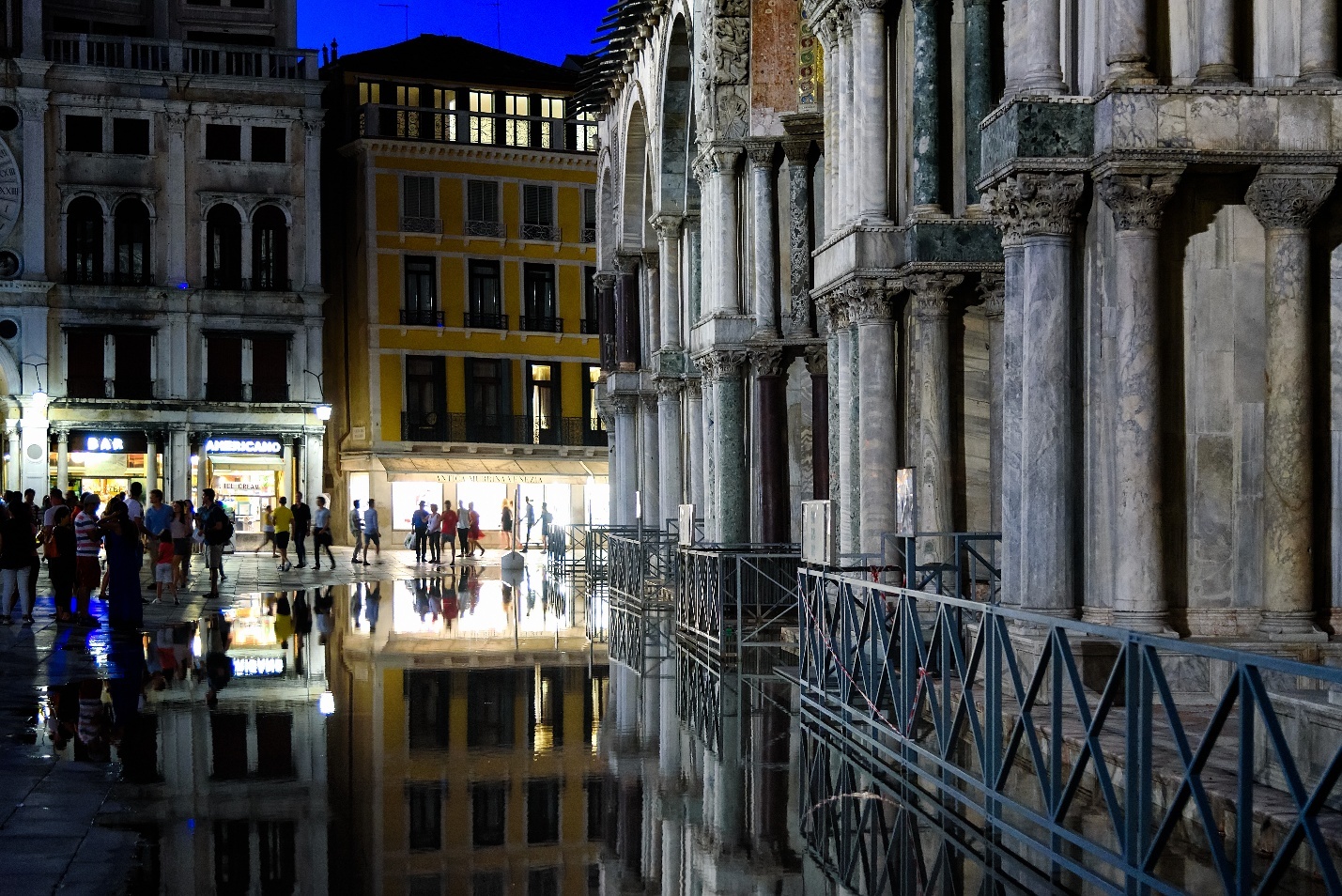
Some examples of adaptation actions include: To protect from sea-level rise and coastal erosion, coastal protection is an obvious response which can be approached in two ways. The first is a ‘hard’ response to create physical man-made structures, for example, the project to develop submerged mobile barriers at the lagoon inlets in Venice. Such approaches may be effective but can be very expensive. The second approach, potentially much cheaper, could be to use nature-based solutions, such as the expansion of coastal wetland ecosystems to help control water levels, weaken the power of storm surges and stimulate sedimentation.
Other examples include treatments to structures to help increase resilience to heat or humidity stress, improved drainage systems to reduce the risk of surface water flooding during extreme precipitation events and developing plans to temporarily remove the inventory of a vulnerable World Heritage Site—for example, valuable paintings and other portable and vulnerable pieces—during a flood or other extreme weather event.
Relocation may be an option of last resort for those World Heritage Sites that are at particularly high risk and that consist of an individual monument. However, for sites that extend over large areas, relocation may be impossible and it should be expected that losses will occur where sites face particularly high risks and there are few feasible options for adaptation.
Case Studies
Blanket terms about climate change being a “risk multiplier” or “exacerbating existing risks” are helpful but they do not convey a sense of the reality of the risks faced on the ground at specific locations. Digging deeper, it is valuable to examine some real case studies relating to specific cultural world heritage sites to demonstrate the variety and extent of the risks being faced by these sites, the actions taken to respond to those risks, and to show that each site is unique. The following three examples from the Americas, Europe, and Africa have been summarized from a recent UN document.[6]
Example 1: Ivvavik, Herschel Island, Canada (Archaeological)
Description: This site illustrates the very early human occupation of northwest North America via the Bering Yukon Refugium, the traditional land use adaptation of aboriginal cultural traditions to extreme environments, and the 19th-century whalers’ settlement of Herschel Island.
Climate Risk: Loss of sea ice and melting of permafrost.
Impacts: Decrease of sea ice is leading to a higher exposure of coastal areas to storms, therefore enhancing coastal erosion; deterioration of permafrost is leading to ground slumping, posing stress on historical grave markers and even caskets buried in the ground.
Adaptation Actions: Authorities have been forced to undertake salvage of archaeology of ancient Thule dwellings and move buildings inland.
Opportunity: Melting permafrost could reveal new sites of importance but could be under threat as the conservation was guaranteed by the ice and snow.
Example 2: Venice, Italy (Historic Cities and Settlements)
Description: Founded in the 5th century and spread over 118 small islands, Venice became a major maritime power in the 10th century. The city and its Lagoon are directly associated with events and living traditions, with ideas, beliefs, and artistic and literary works of outstanding universal significance. Therefore, it was inscribed in 1987 on the World Heritage List under all six cultural criteria.
Climate Risk: Flooding.
Impacts: Flooding associated with sea-level rise is exacerbated by Venice’s sinking due to natural subsidence. In the recent past, the frequency of flooding and damage has greatly increased, and out of the ten highest tides on record up to 2019, five have occurred since 2000.[7] According to moderate scenarios of climate change, the projected net elevation loss of Venice will reach 54cm by 2100, potentially causing daily flooding.
Adaptation Actions: The Italian government has opted to implement mobile barriers to defend the city from high waters. Work is ongoing, with the barriers set to begin operation in late 2021.
Example 3: Timbuktu, Mali (Historic Cities and Settlements)
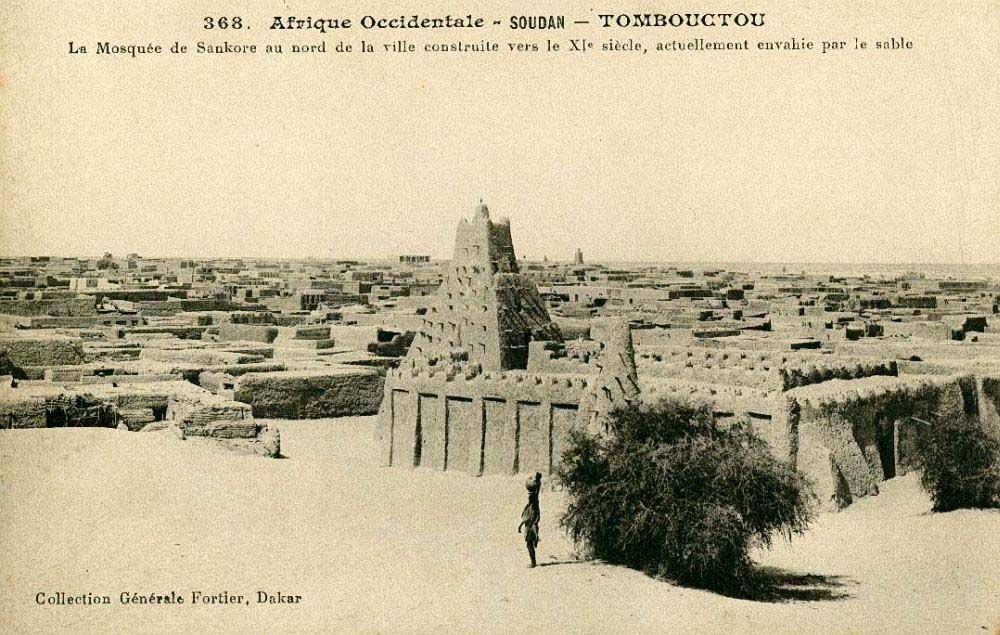
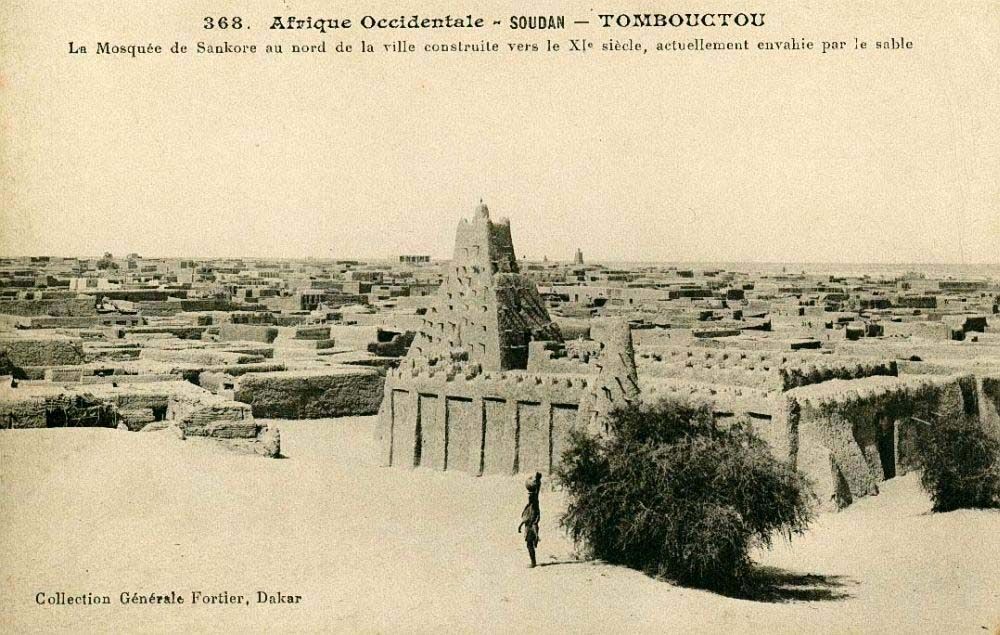
Description: Home of the prestigious Koranic Sankore University and other madrasasm Timbuktu was an intellectual and spiritual capital, and a centre for the propagation of Islam, throughout Africa in the 15th and 16th centuries. The three great mosques of Djingareybar, Sankore and Sidi Yahia recall Timbuktu’s Golden Age and were inscribed in 1988 on the World Heritage List.
Climate Risk: Desertification and extreme precipitation.
Impacts: Desertification is an important source of stress for the mosques of Timbuktu. Between 1901 and 1996, temperature increased by 1.4°C in that area and the UN predicts that a rise of 4°C by 2100. The impact of drought is increasing. Projections show that the area will face a decrease in average rainfall, which will enhance desert encroachment and sand-blown damage in Timbuktu. Additionally, Timbuktu is vulnerable to extreme precipitation as shown by the damage suffered in 1999, 2001, and 2003 that caused the collapse of traditional earthen buildings. Modeling future rainfall is a challenge, but the potential impacts underline the need to address this issue.
Adaptation Actions: Restoration of mosques and damaged houses; the removal of sand in the vicinity of the mosques; the creation of buffer zones to protect mosques from sand encroachment; and improvement of the drainage systems of rainwater. These examples illustrate both the seriousness of the threat posed by climate change to cultural World Heritage Sites and also the variety and complexity of the impacts and required responses.
The Response: Risk Assessment and Adaptation Planning
Given that a significant level of climate change is ‘locked-in’, even if countries fulfill their NDCs under the Paris Agreement, there is a need to consider and plan for actions to reduce the adverse impacts that may arise, and to identify and harness any beneficial opportunities. This is known as climate change adaptation.
A key part of any adaptation plan is a risk assessment. Governments around the world are increasingly using risk assessments to identify the most relevant climate change-related risks to their country, with a particular emphasis on critical infrastructure and livelihoods, and developing adaptation plans to manage those risks, and the established methodologies used can be adapted for use by cultural World Heritage Sites. The examples in Section 7 above provide an insight into the diversity of impacts being felt by specific cultural World Heritage Sites and some of the actions that are being taken to help mitigate those impacts.
In this section, the paper examines one well-respected approach to developing risk assessments and adaptation plans from Australia called “Coast Adapt”.[8] Other approaches that may be useful to examine, but not covered in detail in this paper, are those of the Adaptation Sub-committee of the UK’s Climate Change Committee, the statutory body advising the UK government under the 2007 Climate Change Act,[9] and the methodology used by the World Bank to assess risk and resilience, as set out in their 2017 report entitled “Climate Vulnerability Assessment: Making Fiji Climate Resilient.”[10]
Coast Adapt uses a five-step approach, summarized here:
Step 1: The challenge
The first step is to clarify the objectives and to understand how climate change is likely to affect the site. This step is about defining the scope of the risk assessment, identifying barriers, setting a vision, understanding climate threats and opportunities, running a ‘first-pass’ risk screening (a crude assessment, potentially an ‘in-house desktop study’ using readily available information and expert opinion), building buy-in, and identifying and engaging with stakeholders.
Step 2: Determine vulnerability
Building on the ‘first-pass’ risk screening, develop a more detailed risk assessment; collect information about the climate change projections for the specific geographical area of interest; develop three scenarios—‘worst-case’, ‘best-case’, and ‘mid-range’—to explore the range of possible future outcomes; and understanding adaptive capacity.
Step 3: Identify options
There are many potential options for adapting to climate change, and it is important to identify a wide range. Some options may help to cope with present climatic extremes, while others will help once the effects of climate change become greater. A good way forward is to develop a sequence of options that can be implemented as the effects of climate change become more apparent.
Step 4: Prepare a plan
The adaptation plan requires a suite of options that are developed in consultation with stakeholders and a set of ‘SMART’ (Specific, Measurable, Achievable, Realistic, and Time-bounded) indicators to signal when options should be implemented, and when funding is needed.
Step 5: Take action
This step focuses on implementing adaptation plans. This includes overcoming barriers, implementing actions in sequence, obtaining funding, building partnerships, and ensuring engagement takes place throughout.
Step 6: Monitor and evaluate
Monitoring and evaluation is an essential component of any adaptation plan. Trigger indicators and performance indicators can be monitored and the results used to determine when actions should be implemented and to track the success of the adaptation plan. Effective monitoring and evaluation underpin the planning cycle. More detail on all of these steps can be found here: https://coastadapt.com.au/coastal-climate-adaptation-decision-support-c-cads
Regular Reviews
Given the uncertainties associated with climate risk and the ever-greater understanding of the science and experience gained through implementation, it is sensible to conduct a full review of the risk assessment and adaptation plan on a regular basis. The IPCC publishes updated summaries of the science of climate change through its Assessment Reports every five years. The Synthesis of the next one—the Sixth Assessment Report—is due to be published in the first half of 2022. It may make sense to coordinate the reviews of risk assessments and adaptation plans for cultural World Heritage Sites so that they follow the publication of the IPCC reports, or local reports with higher resolution based on the IPCC reports, to ensure they reflect the latest science about the risks of climate change and also take into account the experience of implementing the adaptation actions thus far and experience gained from other World Heritage Sites that may be relevant.
Using a World Heritage Site Network to Share Experience and Promote Good Practice
Although the risks to cultural World Heritage Sites will be unique to each site, there will be similarities with other sites, and knowledge sharing will be valuable. In addition, the experience of sites that have already been through the process of generating risk assessments, adaptation plans, and implementation, will be valuable to sites beginning their own plans. The World Heritage Site network should be utilized to help promote good practice and provide a support network to help maximize the effectiveness of climate change adaptation across all 869 sites. To that end, the Climate Heritage Network (http://climateheritage.org/) was launched in October 2019. It describes itself as “a voluntary, mutual support network of arts, culture and heritage organizations committed to aiding their communities in tackling climate change and achieving the ambitions of the Paris Agreement.” This network has the potential to play a key role in sharing experience and promoting good practice on climate change issues and should be supported.
Encouraging a Greater Focus on Climate Change by Including a Climate Change Risk Assessment in the Documentation for Applications for WHS Status and in Management Plans
To help promote awareness about the need to consider and address climate risk relating to cultural World Heritage Sites, the World Heritage Committee could require a climate risk assessment as part of the application process for World Heritage status. In addition, a risk assessment and adaptation plan could be required of management plans for existing sites.
The Role of Cultural World Heritage Sites in Mitigation and Communication of Climate Change
Although this paper focuses on the impacts of climate change on cultural World Heritage Sites, there is also a role for these sites in mitigating climate change and educating the public. World Heritage Sites could embark on a journey to carbon neutrality by a given date, for example, 2030. This would involve calculating their direct greenhouse gas emissions and exploring how they can reduce their carbon footprint as far as possible, for example, through sourcing renewable energy, and offsetting any unavoidable emissions through an accredited offset scheme. Indirect emissions could also be explored and reduced through, for example, encouraging visitors to use public transport instead of private vehicles. In addition, given the large number of tourists that visit many cultural World Heritage Sites, these places provide an effective way to communicate the impacts of climate change to the public. This could include general information about climate change and information about the projected impacts of climate change to the site itself, and offering suggestions for how the public can help, for example, pointing them to sources of information about calculating and reducing their personal carbon footprint, offsetting unavoidable emissions, and even fundraising appeals to help pay for adaptation actions required for the site itself.
Recommendations
It is clear that climate change presents a serious threat to cultural World Heritage Sites around the world, especially given many sites are coastal and thus vulnerable to sea-level rise and coastal erosion. It is also clear that the risks facing cultural World Heritage Sites are not uniform and vary greatly according to location and form. In order to maximize resilience, this paper makes the following recommendations:
Recommendation 1: Those cultural World Heritage Sites that have yet to do so must undertake a bespoke climate change risk assessment and develop an adaptation plan as soon as possible.
Recommendation 2: The risk assessment and adaptation plan should be reviewed regularly, at a minimum of every five years, to ensure they take into account the latest scientific knowledge summarized by the IPCC in its Assessment Reports and benefits from the experience so far in implementing the adaptation plan and from relevant experience at other World Heritage Sites facing similar risks; the next IPCC Assessment Report—the Sixth—is due in the first half of 2022, so reviews should be timed to take place within 12 months of the publication of that report.
Recommendation 3: Site managers and other stakeholders should join and support the Climate Heritage Network. Set up in 2019, this network provides a way to share information and experience, and offers a platform from which to learn from each other in responding to climate change risk.
Recommendation 4: The World Heritage Committee should include a climate risk assessment as a requirement in documents submitted as part of the World Heritage application process and should mandate the production of a climate risk assessment and adaptation plan as part of the management plans for existing sites by the end of 2021.
The implementation of these recommendations has resource implications. Government leadership and enlightened government policies will be required to ensure appropriate resources are allocated to conserving and strengthening the resilience of cultural heritage to climate change. In some cases, government resources may need to be supplemented by private financing, requiring innovative new funding mechanisms. The Climate Heritage Network could be a space where management authorities devise and share ideas and experience about generating financial resources to support the development of risk assessments and adaptation plans, as well as sharing experience of producing and implementing the assessments and plans.
See URL: https://whc.unesco.org/en/climatechange/.
IPCC. Climate Change 2014: Synthesis Report. Contribution of Working Groups I, II and III to the Fifth Assessment Report 2 of the Intergovernmental Panel on Climate Change [Core Writing Team, R.K. Pachauri and L.A. Meyer (eds.)]. IPCC, Geneva, Switzerland, 2014. SPM.2.3.
IPCC. Climate Change 2014: Synthesis Report. Contribution of Working Groups I, II and III to the Fifth Assessment Report 3 of the Intergovernmental Panel on Climate Change [Core Writing Team, R.K. Pachauri and L.A. Meyer (eds.)]. IPCC, Geneva, Switzerland, 2014. SPM.8.
Reimann, L., Vafeidis, A.T., Brown, S. et al. Mediterranean UNESCO World Heritage at risk from coastal flooding and erosion 4 due to sea-level rise. Nat Commun 9, 4161 (2018). https://doi.org/10.1038/s41467-018-06645-9.
Pickrell, John. “Thousands of Ancient Aboriginal Sites Probably Damaged in Australian Fires.” Nature News. Nature 5 Publishing Group, January 23, 2020. See URL: https://www.nature.com/articles/d41586-020-00164-8.
Colette, Augustin, and Kishore Rao. Case Studies on Climate Change and World Heritage. Paris: UNESCO World Heritage 6 Centre, 2009. See URL: https://whc.unesco.org/en/activities/473/.
BBC. “Venice Floods: Climate Change behind Highest Tide in 50 Years, Says Mayor.” BBC News. BBC, November 13, 2019. 7 See URL: https://www.bbc.com/news/world-europe-50401308
See URL: https://coastadapt.com.au/how-to-pages/how-to-conduct-a-climate-change-risk-assessment.
See URL: https://www.theccc.org.uk/.