Executive Summary
Looting and trafficking in cultural antiquities have been a scourge on the art world for centuries. Technology and the accessibility of numerous online platforms have only made the problem worse. Indeed, unloading a stolen artifact is as easy as a click of a mouse. But just as art thieves and cultural racketeers are taking advantage of new communication vehicles to sell valuable stolen treasures, those of us who are committed to preserving antiquities can harness those same tools and others to raise awareness and protect cultural heritage.
This paper explores ways in which public awareness campaigns have been used to advance the protection of human life, endangered species, and antiquities, and it offers suggestions for how NGOs, individuals, and other interested parties can advance the cause of protecting cultural heritage and antiquities.
Introduction
Over the last several decades, the nature of media has changed dramatically, with literally hundreds if not thousands of outlets that gather, repackage, and transmit news, information, and opinions. This presents challenges in terms of sorting truth from fiction and finding experienced and knowledgeable reporters to write thoughtful stories. But it also provides an opportunity to identify niche outlets and reporters to promote stories and to share ideas directly through self-published articles and social media content.
The public is also more engaged than ever before. Indeed, Nielsen found in 2018 that on average, Americans spent over 11 hours a day watching, reading, or interacting with the media. And a USC study from 2013 found that since the 1960’s, media consumption has increased at compounded rates of between three and five percent a year. This increase in media sources, combined with a voracious appetite for content, creates avenues for showcasing compelling information, recruiting volunteers, inciting action, and driving change.
Many archaeologists now use the internet and social media to engage in exciting campaigns that highlight their findings, and successful NGOs have learned that involving the broader public in their causes can spur action, increase fundraising, change public opinion, and drive legislative change. There is great untapped potential.
Learning from Success
In recent years, public awareness campaigns have been important in changing social norms. Individuals once engaged in activities they believed were appropriate, but following successful advocacy campaigns, they became more conscious that their behavior had devastating effects. As a result, social mores changed, and behaviors, laws, and regulations have begun to follow.
Global Witness - Conflict Diamonds
The case of diamonds offers an excellent example. For generations, diamonds were a luxury to be dreamed of, offered as a symbol of love and devotion in engagement, and, if you were lucky enough to own one, enjoyed. Little did people know that the cost of owning a diamond often extended far beyond the dollars expended at the jewelry store.
But in 1998, Global Witness exposed the issue of conflict or blood diamonds. Their first, ground-breaking report, “A Rough Trade,” revealed that diamonds were a source of funding for the civil war in Angola. The report opened the world’s eyes to secretive practices that were widespread in the diamond industry. Through a steady promotion of reports, open letters, briefings, and even a movie, the advocates for change developed a distinct message about “blood diamonds,” shone a spotlight on these practices, and pushed to reform the diamond trade. Global Witness worked with governments to create a certification scheme that requires member countries to establish an import and export control system for uncut diamonds. While Global Witness now believes this process won’t solve the problem without additional measures they continue to advocate for, today more than 75 of the world’s diamond-producing, trading, and manufacturing countries participate in this regime.
WildAid – Ivory
Ivory trade has undergone a similar transformation. Ivory carvings, jewelry, and objects of art have historically been regarded as beautiful things to own and collect. The brutal killing of elephants required to harvest the ivory was not well understood. WildAid, which is dedicated to protecting marine resources, advancing anti-poaching efforts, and reducing climate change impacts, was key to changing that. They have focused their anti-poaching efforts on building public awareness and reducing demand for ivory. They believe “when the buying stops, the killing can too.”
Through a creative ambassador program, WildAid has enlisted partners and luminaries ranging from Prince William and Richard Branson to Leonardo DiCaprio and Jackie Chan to garner attention. One graphic video, featuring WildAid ambassador and basketball star Yao Ming, appeals to Chinese consumers. It begins with Ming holding a simple ivory bracelet, and then the video cuts quickly to a horrific picture of an elephant whose tusks have been removed. Ming then explains that this slaughter of elephants is the real cost of the bracelet, and he gives a call to action, urging people not to buy ivory goods. Organizations must think carefully and weigh potential consequences when using potentially upsetting images, but in this case, they are compelling.
Partnering with other wildlife conservation groups in 2012 to tell this story, the campaign has had a powerful effect, achieving a 50 percent increase in people who recognize elephant poaching as a serious issue, with 95 percent of the public believing that governments should act to end the ivory trade.
UNESCO – World Heritage
UNESCO has developed a robust public awareness effort that uses a hands-on strategy to raise awareness and promote the conservation of cultural heritage sites. In 2008, they launched the World Heritage Volunteers Initiative (WHV) aimed at encouraging young people to take an active role in protecting and preserving World Heritage sites. Working with a host of like-minded partners and organizations, such as European Heritage Volunteers and the Coordinating Committee for International Voluntary Service, they organize “action camps” for national and international volunteers to engage in hands-on activities to preserve natural and cultural sites and to raise awareness in local communities about their heritage. With programs spanning the Rainforest of Madagascar and the Temple Cemetery of Confucius and the Kong Family Mansion in Qufu, China, to the Archaeological Park of Herculaneum, the program receives attention on social media and since its inception, has engaged over 100 youth organizations and NGOs and attracted some 5,000 volunteers, with 350 camps held in 60 countries around the world.
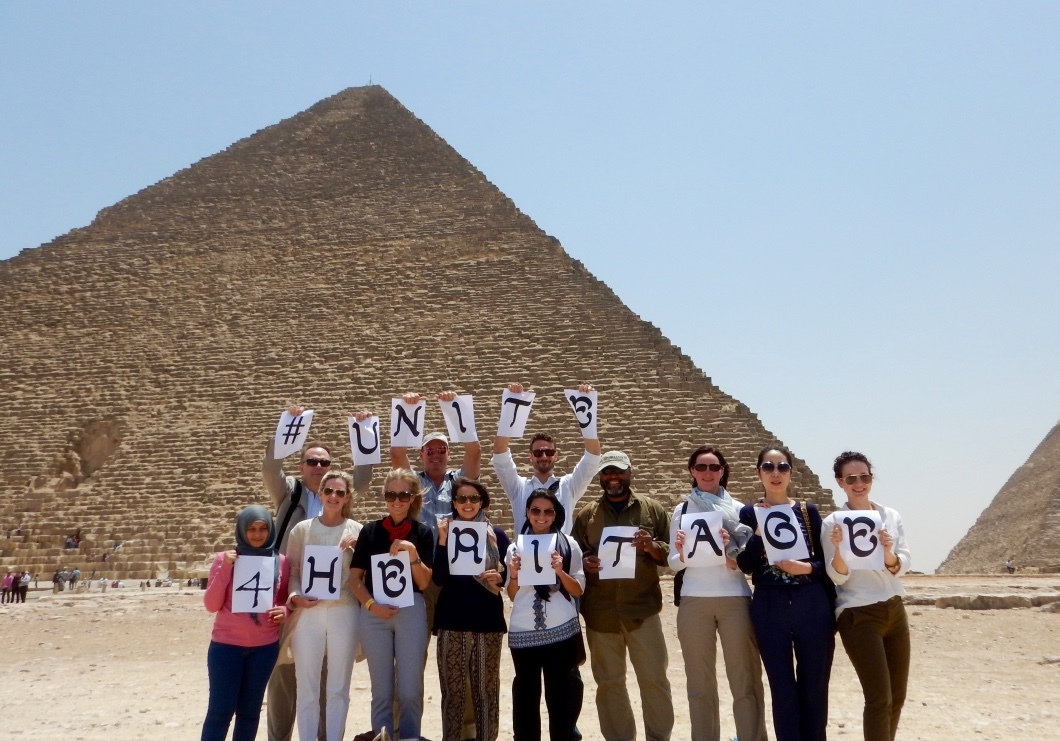
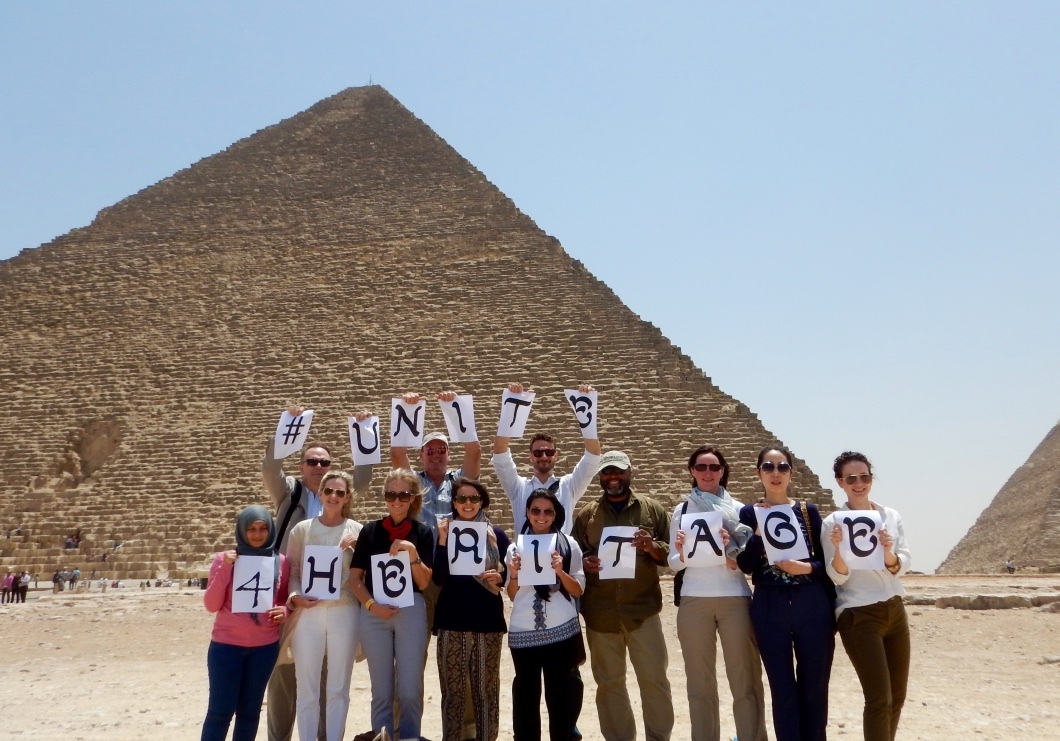
In a separate 2015 initiative, in response to the destruction of cultural heritage by violent extremist groups, UNESCO launched #Unite4Heritage. The UN agency has worked to meet their younger, online audience on the media channels they frequent. As the hashtag in the name suggests, the program uses social media, featuring a multilingual “Social Media Newsroom,” to appeal to an international audience, focused on young people.
#Unite4Heritage has since put together a compelling array of YouTube video stories from around the world and launched a #Faces4Heritage campaign that presents an opportunity to combine a Facebook cover photo with the face of a treasured antiquity.
Antiquities Coalition – Antiquities and Cultural Heritage
The Antiquities Coalition (AC) has engaged in a multi-faceted effort to highlight the international crisis of cultural racketeering and the threat it poses to national security and world heritage.
From creative use of satellite technology to demonstrate before and after images of cultural sites that have been looted and a Buyer Beware public awareness video to infographics and interactive timelines and maps, AC is identifying ways to reach both sophisticated and lay audiences.
The Coalition’s international timelines and story maps have been particularly successful. The timelines “illustrate victories in the fight against cultural racketeering,” and allow users to explore in 2D and 3D everything from law enforcement actions to international agreements to halt illicit trade. Users can get a quick picture of the issues or take a deep dive and learn more about particular countries, artifacts, or actions. Similarly, the AC’s story maps offer an engaging way for users to understand how even sophisticated and esteemed collectors can turn a blind eye to cultural racketeering or be scammed. For example, the story map “Like a Bull in a Museum” takes users from a police raid of the Metropolitan Museum of Art where an ancient bull’s head is seized to the object’s source country of Lebanon, where the bull’s head is excavated in 1967 and then stolen in 1981, ultimately making its way to one of the world’s most venerable museums.
In addition to planned initiatives, AC is fast on their feet with responses to news developments, issuing statements and doing media appearances on events like the Museum of the Bible returning artifacts to Iraq, the targeting of Iranian cultural sites, and the raid recovering stolen artifacts.
The results of these efforts are paying dividends. In the month that AC released its “Closing US Borders” timeline, which provides a detailed history of the United States’ cultural bilateral agreements and emergency actions, AC saw a 30 percent increase in new visitors to its website and a 9 percent increase in Instagram followers. This advocacy effort has also seen concrete results, with six new MOUs, six renewals, and one Emergency Import Restriction signed since the timeline’s release.
Common Elements in Successful Campaigns
These initiatives feature very different topics and employ a range of tools, but they share key elements. All of the non-profit campaigns seek to change behaviors about long misunderstood or little-known issues that have big impacts on our society and the world.
Each campaign engages the traditional media, offering newsworthy stories that attract mainstream and trade press coverage, such as UNESCO’s recent Little Artist Exhibition, which was created in response to the COVID-19 pandemic and lockdown.
But they also go around the media by appealing directly to their target audiences. The campaigns work with or without traditional media coverage, such that an interested person can follow a story, get updates, learn about a topic that has long interested them, or that has just caught their attention. For example, the #Unite4Heritage is based on young people using social media, and the Antiquities Coalition has a range of interactive tools that directly involve users.
The campaigns use fresh and often edgy content to capture attention. With so much news clutter and seemingly limitless content options, these groups recognize they must be bold to break through. WildAid videos offer a vivid example with their use of celebrities to tell shocking stories.
Each of these initiatives has a steady presence and continues to keep their ideas front and center. They recognize that only through a steady drumbeat of messaging, with constantly new and changing content, will their campaigns reap results. Perhaps most important, each of these initiatives is built around inspiring people to take—or avoid—action. They take advantage of the fact that people are thirsty for news and information and have a growing sense of social responsibility.
Conclusion: Inspiring Change
As these examples show, various efforts are being made to bring attention to the threat to antiquities from looters, illicit trade, and racketeering.
But they also demonstrate that more is needed. We have a long way to go before the horrors associated with illicit trading in cultural antiquities is as well understood as that of conflict diamonds or the ivory trade. And we have even farther to go to achieve the international cooperation necessary to thwart cultural racketeers and prevent both the looting of cultural heritage and the ongoing illicit trade.
Organizations that are committed to protecting antiquities and cultural heritage have an opportunity to step up their public engagement with active campaigns. The following are key recommendations to consider when embarking on such an initiative.
-
Develop a distinct message – Winning campaigns are centered around ideas that are communicated in clear, compelling language. Whether it’s “Bounty, the quicker picker upper” or a simple term like “Blood Diamonds,” messages that resonate are those that the audience understands without having to read a 50-page academic paper. Creative messaging—whether controversial and edgy or clever and fun—also has the benefit of being able to attract media attention, resulting in additional traction. Political campaigns employ this tactic with frequency, developing an edgy “ad” and purchasing only Internet advertising or one buy on a tv station, but relying on the mainstream media to write stories, play the ad on tv and drive users to watch online. The “Daisy Girl” ad from the 1960s, which ran only once, is the classic early example of this phenomenon.
-
Communicate to your audience through channels they use – Once you have your message defined, you have numerous avenues to connect with your audience, but it’s important to carefully think through which mediums are most likely to be seen and used by the people you’re trying to reach. For example, in the cultural heritage space, archaeologists, academics, and policymakers rely on platforms such as Chasing Aphrodite, Poetry in Stone, ARCA, and Trafficking Culture. At the same time, virtually all mainstream reporters and trade press follow Twitter, and the younger audience we need to reach is keen on TikTok and Instagram.
-
Think about your medium – When you’re using all the communications tools at your disposal, be sure to tailor your messaging to fit the medium. Even with the expanded word count now allowed on Twitter, the medium and users expect short, bite-sized messaging. For example, you may be posting a thoughtful academic paper to your website, which will, of course, be accompanied by a press release, but think about coming up with a clever video that summarizes it to post on Twitter, Facebook, and TikTok. Language that works well in an academic paper is likely different from the casual dialogue users of Twitter love.
-
Make your content easy to share – After having gone to all the work to develop thoughtful and creative content, give users an easy avenue to share the material with others and post to their own social media channels. Provide buttons that allow them to share with ease. You may also want to consider working with your partners and allies to ask them in advance to harness their own social networks to share your content, perhaps providing them with suggested Tweets if you know they are influential and strapped for time.
-
Ensure a steady drumbeat – Remember that today’s users are constantly accessing the news (11 hours a day is a lot!), and that means you must continually feed the beast. If you want your audience to get engaged and stay engaged, you will need to regularly provide news, commentary, and updates to keep them coming back for more.
-
Have a plan before you begin – Given the importance of providing timely and frequent updates to your campaign, ensure that you’ve thought through the arc of how you will roll out information. Before posting an academic paper, for example, you may want to line up several esteemed experts willing to write on the related topics so that you can offer a series that builds on your theme. Create a calendar that helps guide how you will amplify the paper’s publication on social channels over the course of several weeks before releasing the next paper in the series. Sometimes, the act of planning will help you see opportunities or help ensure that you avoid working on something that doesn’t have the legs to carry the idea forward.
-
Stay vigilant about opportunity – Even with a solid calendar as an outline for your campaign, news stories and the activities of your colleagues can provide openings for you to reinforce your own themes. The discovery or recovery of a lost artifact, the escalation of conflict in a war-torn region, or the publication of a paper or launch of an awareness campaign by a colleague are the kinds of things that you and your organization can comment on. Here, your social media platforms offer a quick and easy way to engage. Whereas in decades past, you might have hoped your quote would be picked up in a mainstream or trade publication, today your thoughts can be shared with thousands of people almost as quickly as you can think them.
-
Stay vigilant about the risk – The ease of communication comes with dangers too. Just as easily as someone can say something smart and clever about a news story, someone can say something stupid and clever. So be sure that as you’re thinking fast about getting in the mix and taking advantage of the moment, that you’re pausing to really game out all sides of how your actions will be perceived. Establish guidelines that make clear who has the authority to engage publicly on behalf of your organization and the approval process for doing so.
-
Look for partners who can magnify your message – Many organizations share the commitment to protecting antiquities, but not all have the resources to meaningfully embark on a public awareness campaign. That said, several smaller organizations can team up to stretch their budgets and reach. For example, a big name in the field may be willing to participate in an event that is hosted by three medium-sized organizations.
-
Provide a call to action – Now that you’ve caught the attention of your audience and you have them coming back for more, give them something to do. Whether you want them to urge the government to take an action, stop buying the ivory bracelet in the WildAid example, or simply post your video to their own social channels, amplify your message by calling on your audience to act.
The Antiquities Coalition, UNESCO, World Monuments Fund, ICOM, and various governments, such as Egypt and Italy, have led the way in raising awareness. These efforts have had an impact on looting, closing borders to illicit trade, understanding who the criminals are who traffic the world’s heritage, and getting the message to consumers that there are serious consequences in an unchecked market. Still, cultural heritage remains under attack throughout the world. And when we lead effective public awareness campaigns, our efforts can help ensure that the past is protected for the future.